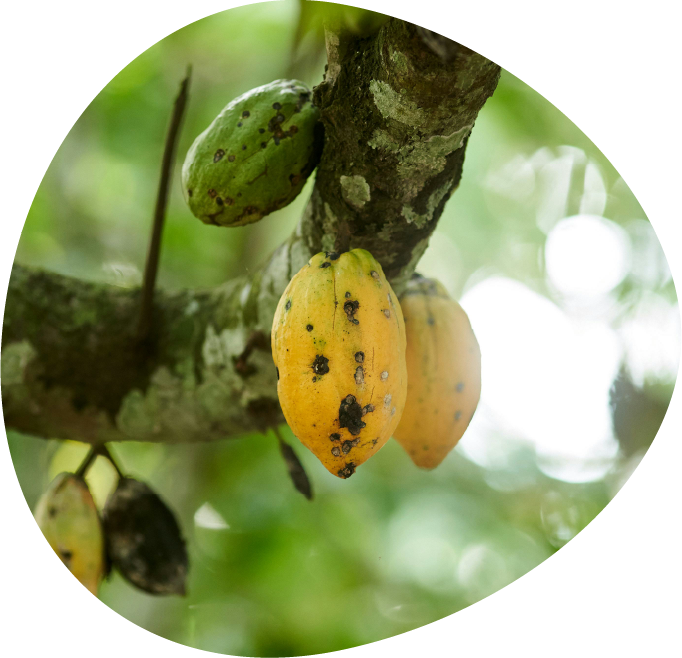

Cocoa pods hang gently from the trunks and branches of tropical cacao trees, creating a colorful and textured landscape that feels both natural and artistic. The surface of each pod carries deep ridges, subtle curves, and shades that range from green and yellow to orange, red, and rich brown. Farmers walk through humid plantations early in the morning, checking the growth of the pods while the air carries the scent of wet soil, leaves, and tropical flowers. Sunlight filters through the tall trees above, creating moving patterns across the orchard floor and giving the cocoa fields a calm and peaceful atmosphere.
The cocoa pod itself is an important symbol of chocolate production, agriculture, and craftsmanship. Inside the thick shell are rows of cocoa beans surrounded by soft white pulp with a sweet and slightly tangy flavor. These beans are carefully removed, fermented, dried, and later transformed into cocoa powder, chocolate bars, beverages, desserts, and countless recipes enjoyed around the world. Every cocoa pod represents a long journey from tropical farms to kitchens, bakeries, cafés, and chocolate factories. The process combines nature, patience, knowledge, and tradition.
Rainfall plays a major role in cocoa production. Cacao trees grow best in warm climates with high humidity and steady rainfall throughout the year.
After a heavy rain, the leaves appear glossy and vibrant while the cocoa pods stand out against the darker trunks. Morning mist often settles over the plantations, creating a dreamy and cinematic atmosphere. During dry periods, farmers pay close attention to soil conditions and tree health to ensure the pods continue developing properly. Climate and environmental balance remain deeply connected to the quality of cocoa harvests.
The colors of cocoa pods change gradually as they ripen. Young pods may begin as bright green or deep purple before transforming into shades of yellow, orange, or red depending on the cacao variety. This natural color change signals to farmers when the right moment for harvest has arrived, requiring careful observation and years of experience to read correctly.
Harvesting cocoa requires skilled hands and the right tools. Farmers use sharp machetes or harvesting knives to cut the pods cleanly from the tree without damaging the cushion that will produce future pods. The pods are then gathered, split open, and the beans are scooped out by hand. This careful work reflects the deep connection between the farmer and the land, a relationship that has been passed down through generations in communities across Liberia and West Africa.
At AfricanPods, we work directly with these farming communities to ensure that every step of the process is handled with care and respect — for the crop, for the farmers, and for the buyers who depend on consistent, high-quality supply. Our presence at origin allows us to maintain standards that most exporters can only promise from afar.